Grace's Mosaic Moments


Saturday, July 10, 2021

How to Develop Your Characters - Names

 We were very proud of our Cassidy this past week. She and her long-time friend Hannah did 100 grueling hours of training at a multi-county Law Enforcement Explorers' Academy (which began at 7:00 a.m., five days a week, for two weeks). They suffered through drill, running, push-ups & lots of yelling from genuine Drill Sergeants (ex-Marines). They also learned self-defense, handcuffing, did target practice (Cassidy was #3 in the class), traffic stops, DUI testing, and much more. At graduation, we were even more proud when Cassidy received one of two awards for Academic Excellence (scoring 100 on her final exam, beating out her friend Hannah, who scored "only" 99.)

End of Day 1 - Hannah, Cassidy & Kylo

Cassidy w/diploma & trophy

Cassidy, Hannah & friends

~ * ~

"The Nitty Gritty of Names," excerpted from my "how to" book on Writing & Editing, Making Magic With Words, was so popular, I decided to continue with another excerpt on names - a topic that's absorbing a good deal of my time at the moment as my new Gothic, The Secrets of Stonebridge Castle, seems to be running toward a cast of thousands (unusual in a Gothic, which customarily emphasizes the heroine's "aloneness"). This is a post from the very first year of my blog, almost a decade ago. (The references to erotica seem a bit dated now, but it was very much in every author's mind at the time, as publishers were getting rid of their "mild" romance lines - and authors - in favor of hot, hot, hot.)


October 15, 2012


HOW TO DEVELOP YOUR CHARACTERS  - Names

 At a booksigning at Orlando’s Central Library, a young lady asked me: “How do you develop your characters?” I gulped and thought fast, because I never took a writing class, read a “how to” book, or even stopped to think about it before. Fortunately, I managed to come up with at least the germ of a reply, but I vowed on the spot to examine the subject more thoroughly and write a blog post about it. So here is Part 1.

Put quite simply, there is nothing more important than characterization when writing fiction. Even the best Action/Adventure books and the best Erotica feature well-drawn characters. Are there many books that don’t? You betcha! (And I never get beyond the first ten pages.) But most readers demand more than guns/swords/chase scenes/explosions or heaving bosoms and graphically delineated bare body parts. For which writers like me, who really care about our characters, are eternally grateful!

As I have written when critiquing hundreds of contest entries for the Romance Writers of America:  readers want to love their heroes and heroines. They want to empathize with them, feel their joys, their sorrows, the warmth of that final Happily Ever After. It’s all right for these main characters to have faults. In fact, faults, whether major or minor, usually add color to the story. But readers always need to know that these faults are going to be resolved. Or perhaps realize that the fault is so minor it can be more endearing than annoying.

Secondary Characters are important too. Even though they might not have a Point of View (the story is not being seen through their eyes), they can add an immense amount of color to your book. Villainy, humor, anger, spice, annoyance, etc. Secondary characters can be a sounding board for the Hero’s and Heroine’s thoughts or actions. They can provide shock, condemnation, comic relief. They allow exposition of ideas and plot action through dialogue with the Hero or Heroine. They can also be the Villain or the Bad Guys. As long as you don’t allow them to overshadow the Hero or Heroine (which can happen all too easily), Secondary Characters are vital to a good book.

So how do you make your readers empathize with your characters?

Where do you start?


1.   NAMES.  Your characters can’t come to life until they have names, first and last. When approaching a new book, I spend a lot of time looking through my old baby-name books, searching for first names. I scribble a bunch of possibilities on a yellow legal pad, and then I go on a search for last names. For example, for my Regency books I have a notebook full of typical surnames for the English upper classes. And long lists of less noble English surnames, most of them garnered from the phone book!* I also have a book listing all the towns and hamlets in England, an excellent source of last names for that era. If I need foreign first names, an Internet search can be very helpful. Last names? Again, the phone book, adjusting for possible Americanized spellings. (Of course, if you’ve given up phone books, you may have to look elsewhere!)

 *Grace note update: In 2012, when I wrote this post, finding a phonebook was still possible. Now we have to rely almost totally on the Internet.

When I have a list of first and last names on my yellow pad, I try pairing them up, seeing which ones will work. Which one best suits my hero . . . which best suits my heroine. Naturally, as I do this, I am forced to think about them, molding vague outlines into more human form. After that, I use a similar method to develop names for the characters in the book’s first scene. As well as any important characters who appear later in the book.

Is this name search important, worth spending the time? For the Hero, Heroine, and major Secondary Characters, absolutely. The names should suit the people you have in mind. And the process of choosing will help anchor these people in your mind. They go, for example, from “Heir to a duke” and “Engineer’s daughter” to the names you see in the list below. They rise off the paper and become people.

 2.   CHARACTER LIST.  After I have created names for my Hero, Heroine, and the characters in the book’s first scene, I type up a  Character List.  I put the character’s name first, then who they are. (If I don’t know the physical description yet, I add it as soon as it becomes clear.)  Example - the first few entries from my newest book, Lady of the Lock:


                                                Sample Character List  -  Lady of the Lock


Bourne Granville Hayden Challenor, Marquess of Montsale  [from Lady Silence]

    Heir to the Duke of Carewe   [added later: brown hair, flint gray eyes, mother - Rosalind]

Amanda Grace Merriwether - a young lady of the upper middle class (added later: bronze hair, green eyes, mother - Caroline)

 John Merriwether, her father, a canal architect/engineer [added later: blond, blue eyes]   

 Lady Eulalia Tynsdale - wealthy & eccentric dowager baroness


Grace note:  at the very beginning, before I’ve named everyone, part of the list might read:

 Lady Tynsdale’s companion

Nasty mother & daughter in Bath

John’s young engineers

Butler in Bath

 As the book progresses, I name and add each new character to the list, from friends of the h/h to butlers, housekeepers & maids. In Lady of the Lock, the list eventually ran to three pages, plus a scribbled entry for the name of a horse!


3.    FAMILY BACKGROUND. Although you may not use all the people in your main characters’ backgrounds in your book, it is helpful to figure out what their background is. Were they raised with the proverbial silver spoon, or did they struggle in poverty? Were they only children, or was the hero hen-pecked by a bevy of sisters? Did the heroine constantly struggle to keep up with a host of brothers? Is his/her aunt or grandmother kindly or a shrew? Does the father dote on his daughter, or is he, perhaps, a monster?  Has the hero been on his own since an early age? Is he a bastard? Or is his greatest obstacle learning to stand on his own two feet, because he has led too privileged a life? Is there an uncle who wants to do away with the heroine because he will inherit her fortune? Or is the heroine someone who is willing to sacrifice her happiness for her family? Do we have a wounded hero who returns from war to a country where no family waits? Or one who is deluged with so much love and “help” that he has to get away? Do we have a policeman from a long line of law enforcement, or is he the first of his “old money” family to join the force?


The list of questions you should ask yourself could be endless, but usually only a short Q&A will be enough to get you started. The rest of your characters’ personality traits or outside influences can develop as you go along. Don’t mire yourself down with endless note cards, storyboarding, movie star photos, etc.* Get your names down, decide on your main characters’ background and consequent  personalities, and let the rest develop as you begin to know your character better. As you craft dialogue that is “right” for that character. As your character interacts with the other characters in a variety of ways. Each scene should speak to you, as well as to the reader. Telling you who these characters are.


*Grace note update: I am an advocate of “to each his own.” Therefore, if note cards, storyboards, and photos work for you, by all means, use them. I just want to emphasize that it’s all right if these approaches aren’t for you.

~ * ~


  If you'd like to read the whole "How to Develop Your Characters" series . . .


For a link to all 200,000 words (indexed & linked)
of my blogs on Writing & Editing
from 2011 -2020, click here.

~ * ~

For Blair's updated Facebook Author Page, click here. 

  For Blair's website, click here.


Thanks for stopping by,

Grace/Blair Bancroft


Saturday, June 26, 2021

The Nitty Gritty of Names

 Next Mosaic Moments - July 12, 2021


The competition continues:

Ganesh enjoying the mail

Willow

Buffy

~ * ~


Over the last few weeks, I've been struggling with names for my latest Gothic, The Secrets of Stonebridge Castle. Which reminded me that Names are near the top of the essential "Nuts & Bolts" it takes to create an intriguing novel. So, posted below is a copy of my blog from April 30, 2017, on the importance of naming your characters. (Copy is excerpted from Making Magic With Words, my 200,000-words of Writing & Editing advice.)


 THE NITTY GRITTY OF NAMES

Since I first blogged about the importance of names, I've been working my way through all five books of The Song of Ice and Fire (Game of Thrones) by George R. R. Martin. Believe me, here is the ultimate user of names as a writing technique. The names of Martin's literally thousands of characters sing. They evoke the person behind the name. They scream, they shout, they cry, they suffer. They love, they die. You have only to look at the list of characters at the back of his books to know Martin is a master of the Art of Names. As an example, here is the opening line of the chapter, "The Wayward Bride" from Book 5, A Dance With Dragons:

Asha Greyjoy was seated in Galbart Glover's longhall drinking Galbart Glover's wine when Galbart Glover's maester brought the letter to her.

I ask you, would this line have had the same ring if Martin wrote:

Asha Greyjoy was seated in Glover's longhall drinking his wine when Glover's maester brought the letter to her.

The answer is, Of course not. Full names have a ring to them nothing else can match.

 Another example of the dramatic use of place names, also from Martin's A Dance With Dragons:

When describing a battle at sea, Martin could have written in a single paragraph that a fleet of ninety-nine ships plus a large number of captured ships had been reduced to a mere fifty-four; instead, he spends nine Kindle pages giving details of what happened, including dreaming up some truly remarkable names for ships that are never mentioned again. For example: Noble Lady, Ravenfeeder, Iron Kiss, Headless Jeyne, Fear , Ralf the Limper, Lord Quellon, White Widow, Lamentation, Woe, Leviathan, Iron Lady, Reaper's Wind, and Warhammer.

 Do you and I have Martin's incredible imagination for creating names? Well, I know I certainly don't, so below are the ways I've coped with this problem over the years.

 As my regular readers know, I've spent a lot of time talking about the importance of names—full names and titles, not just first names. But perhaps more advice is needed on how to get past Dick, Jane, David, and Mary. Past wasting time puzzling over last names that have some "zing" to them. Or maybe you need a wimpy name . . . Which is why I always put naming my characters way up at the top of my book preparation list, right after the Title . . . hmm, maybe even before the Title. Where on earth do all these names come from?

Way back when I first began to write, computers had small memories. Hardcopy research was necessary, so that's the way I still do it. In a 4" 3-ring notebook. In those little pocket folders featured every fall in the school supply section. In baby books and place name books, and in scribbles on legal pads. Any way I can to keep those precious names from slipping away.


So how did I compile all these lists over the course of the last 25 years? Let's see if I can reconstruct it for you . . .

 1.  Fortunately, I kept the books of names I bought to search out names for my children. One book included the meanings of each name, the country of origin, and the many variations of the name. Another book listed the names by Traditional, Strong, Ultra-Feminine, Cross-Gender, Biblical, Exotic/Ethnic, Unusual, Very Unusual, etc. Thus, in two small paperbacks, a treasure trove of first names.

 2.  For last names, there's nothing like a genuine phone book. While still living on Florida's Gulf Coast, I used both the Venice and Sarasota phone books. After moving to Orlando, I made an even more sweeping commitment of time to find the English names I needed for my books set in Regency, England. I sat down with the huge Orlando phone book (c. 2008) and copied all the English-looking names by hand onto a legal pad. I used up almost the entire pad, but it has been a boundless source of names ever since. It was that search that turned up the name "Mondragon," which I promptly took for the sorcerer in my SciFi/Adventure, the Blue Moon Rising series.  Nowadays , of course, all you have to do is google any city's phone book, and there it is. Wow! Even specific ethnic names are available with a few strokes of the keyboard.

 3.  In a 4" 3-ring notebook, I have typed lists of many aspects of the Regency, including the following sections on names (mostly compiled from the Regency books of Jane Austen, Georgette Heyer, and Clare Darcy:

First Names, Female

First Names, Male

Last Names

Titles

Servants, Female

Servants, Male

Servants, Last Names

Last Names, General*

 *Last Names, General, has mostly been replaced by the "Orlando" list mentioned above.


4.  I also have pocket folders with names I researched online for different countries, as needed for whatever book I was writing. As of this moment, I have folders labeled:  Russian Names; Greek Names; Medieval Names; Welsh Names; Arab Names; Spanish Names; plus print-outs of Greek Gods and Egyptian Gods.

5.  I have a separate 4" 3-ring binder with the endless details of the world I made up for my Blue Moon Rising series, including pages of astronomical references for place names and the names of space ships. I also created several pages of male and female first and last names for several different races, most based on tweaked versions of standard Earth names, as almost all my characters are descended from Old Earth. (Some really strange ones came directly out of the Orlando phone book!)

6.  Cities, Towns, & Titles. When I was in England, I bought a book called, Dictionary of English Place-Names, a compendium of every last village, town, and city in the country. It has been an immense help in my work. I strongly advise searching the Net for similar books for whatever country is of interest to you.


This mountain of reference materials sits on the first two shelves of a bookcase in my bedroom, the phone books nearer to my bed where I can guard them from people who say, "You don't need those any more. Why don't you throw them out?"! The SciFi notebook rates a place on a desk in my office—close at hand, always ready for me to make sure that I'm spelling a newly created word the same way in Book 3 as I did in Book 1!


SUMMARY.

Names are vital—part of the characterization of hero, heroine, secondary characters, and bit parts. Compiling a compendium of names will save considerable time when you actually sit down to write.

~ * ~


For a link to all 200,000 words (indexed & linked)
of my blogs on Writing & Editing
from 2011 -2020, click here.

~ * ~

For Blair's updated Facebook Author Page, click here. 

  For Blair's website, click here.


Thanks for stopping by,

Grace/Blair Bancroft

Saturday, June 19, 2021

Recipes - Something Different


Ganesh enjoying the great Outdoors


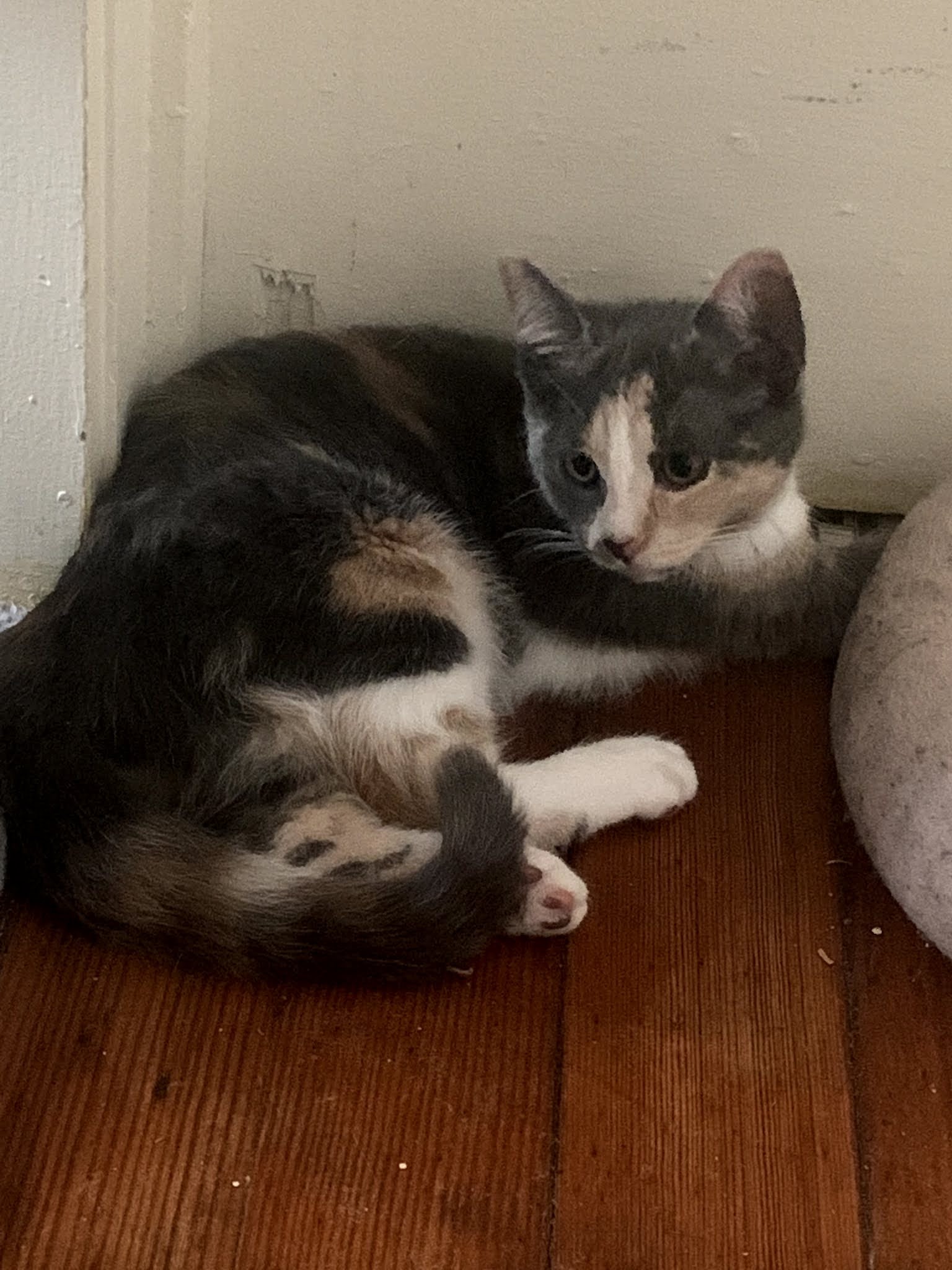
Ganesh now has two rivals for Most Photogenic Cat.


Buffy

Willow


 As delicious as the two recipes below are, I fear they can't compete with this Regency dessert featured on the Facebook group, Lady Catherine's Salon.

How can one possibly cut into such perfection?

 and . . .

 There's actually a mold that turns out like that???

 ~ * ~


RECIPES - SOMETHING DIFFERENT

As regular readers of this blog know, I am a recipe addict, and even though I'd sworn never to buy another cookbook . . . I fell off the wagon with two new ones recently, both from Better Homes and Gardens:  Fast & Fresh and Veggie-Full. And, sure enough, the first two recipes I tried proved worthy of passing along, though I had to play with the chicken recipe a bit.

What makes these recipes special? The taste of each is unique enough to be called "gourmet," without the hours of work that usually go into that sort of thing. Give them a try - and enjoy!

MANCHEGO STUFFED MUSHROOMS

 Grace note:  an online search told me that no grocery store in my area carried "button" mushrooms. When I did an in-store search, I discovered portabellas specfically marked "for stuffing" (6 to a package), even though they were not quite as large as I would have liked." A second store carried similar portabellas and what appeared to be even larger "stuffable" cremini mushrooms So it's safe to say you should be able to find mushrooms suitable for stuffing.


½ cup panko crumbs
2 oz. Manchego or Parmesan cheese, finely shredded
6 TBsp extra virgin olive oil
2 TBs chopped fresh leaf parsley
2 cloves garlic, minced
½ tspn smoked paprika
1 lb. 2 to 2½-inch button mushrooms, stemmed
¼ cup chopped pitted Castelvetrano olives*
3 thin slices Ibérico ham, cut into strips** 

* I used plain old sliced green olives

** I used packaged deli ham

1. Preheat oven to 400° F. Line a baking pan with parchment paper.

2. In a small bowl stir together panko, cheese, 2 TBsp olive oil, parsley, garlic, paprika, and ¼ tsp salt. Spoon filling into mushroom caps, pressing it in and mounding for very full caps. Arrange in prepared pan. Drizzle 4 TBsp oil over mushrooms. Bake 25 min. or until mushrooms are tender and filling is golden. Cool slightly.

3. To serve, top with olives and ham.


ROAST CHICKEN SALAD WITH CURRY & COUSCOUS 

Grace Note:  The photo below is for the original recipe that used roast chicken from the Deli. Since I've found these usually contain preservatives to which I'm allergic, I adapted the recipe for uncooked chicken breasts. Oddly enough, the cooking instructions are nearly the same. The differences:  slicing the raw chicken before cooking and the very different look of the end result (in the photo, the slices are clearly made after cooking).

Special note:  the sauce can be prepared well ahead, the veggies cut up early as well, making this a meal assembled in minutes when it's time to eat. (I was still using the truly fabulous sauce four days after I made it.)


1 cup uncooked Israeli couscous*
6 green onions
¼ cup white wine vinegar or cider vinegar
1 TBsp honey
2 cloves garlic, peeled & halved
2 skinless, boneless chicken breast halves, cut in ½" slices
1 tsp Madras curry powder**
2 cups sliced fresh kohlrabi, carrots, and/or celery***
2 TBsp vegetable oil
Salt & fresh ground pepper 

*the larger-size couscous
 
**I used what I had on hand, which happened to be curry bought on a trip to Istanbul
 
***I used just the celery, very thinly sliced, plus chopped fresh herbs from my garden.
(FYI, kohlrabi is an odd-looking member of the cabbage family.) 

1. Cook couscous according to package directions.

2. For dressing, in a blender, place green onions, ¼ cup olive oil, vinegar, honey, garlic, ¼ tsp salt and ground black pepper, to taste. Cover and blend until smooth.

3. In a plastic baggie, toss chicken slices with curry powder.

4. Using a baking pan large enough to accommodate chicken slices in a single layer, line pan with foil, lay out chicken. Drizzle with 2 TBsp vegetable oil. Season with salt & pepper.

5. Place in a COLD oven. Set temperature to 450° and bake 25-30 minutes or until chicken reaches 165° F.

6. To serve, top couscous with chicken & veggies (& herbs, if available)


Leftovers. Slice chicken thin. Use with drizzled sauce & veggies in a sandwich. (Add a layer of mayo or Miracle Whip to the bread, if desired.)

~ * ~

Don't forget the final book of the Wolfe series:  Matthew Wolfe - Revelations


~ * ~

For Blair's updated Facebook Author Page, click here. 

  For Blair's website, click here.


Thanks for stopping by,

Grace/Blair Bancroft